


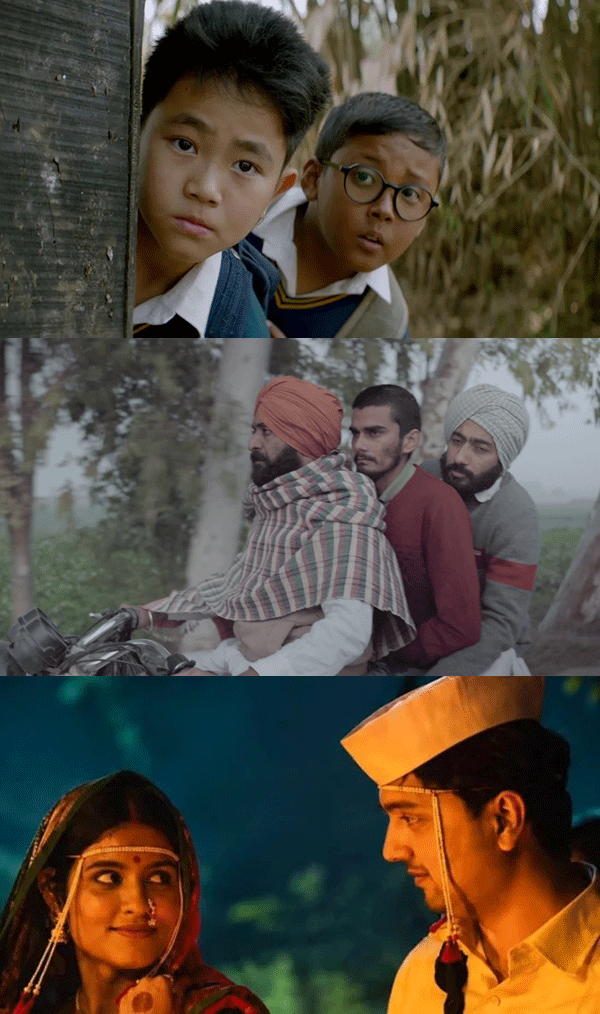
This year, India has two films in the race for the 99th Academy Awards, and neither of them is in Hindi. Gondhal, Santosh Davakhar’s Marathi thriller that plays out over a single night of a traditional Maharashtrian ritual, is India’s official entry for Best International Feature. Angh, Theja Rio’s film set in 1963 Nagaland, found its own way into the race by winning the Platform Prize at the Toronto International Film Festival. It is the first Indian film to win that award.
For all of us at IFFM, the news felt less like a surprise and more like a moment of recognition. Regional cinema has never been a side programme at our festival. It has opened our festival, sat at the centre of our line-up and walked away with our awards. Here is a look back at some of the films and filmmakers who have made that journey with us.
We met Theja Rio before Toronto did
Before Angh had its premiere at TIFF, Theja Rio came to Melbourne with two short films. Ade (On a Sunday), a gentle coming-of-age story about two boys who skip Sunday school, had already premiered at Rotterdam and won Best Film at the MAMI Mumbai Film Festival. Remains was his graduate film from the National Film and Television School in London.
Both screened in our first ever Indian Indigenous Films: Cinema from the Margins section, curated by Meenakshi Shedde, and Theja sat down with Tiriki Onus for a conversation between Indian and Australian Indigenous filmmakers. Angh itself grew out of a 2021 short of the same name, which won a Special Mention at Clermont-Ferrand. So when Theja took the Platform Prize in Toronto a few weeks after leaving Melbourne, it felt a little like cheering for a friend.
Opening nights in Bengali and Tamil
Opening night is the one screening that sets the tone for the whole festival, and two years in a row we have given it to a regional film. In 2025, we opened with Baksho Bondi (Shadowbox), a Bengali film directed by Tanushree Das and Saumyananda Sahi and produced by Tillotama Shome and Jim Sarbh. It came to us after its world premiere at Berlin, with Tillotama playing Maya, a working woman holding her family together in a Kolkata suburb. Aamir Khan lit the ceremonial lamp that evening, and the cast and crew were in the room. Tillotama described the film as a love letter to working women and to dusty afternoons in Barrackpore, and Melbourne received it exactly that way.
In 2026, the opening film was Members of the Problematic Family, the Tamil debut of R. Gowtham. After premiering at the Berlinale, it had its Australian premiere with us on 14 August, with Gowtham and lead actor Karuththadayan attending. It was also nominated for Best Indie Film and Best Director at the IFFM Awards. Our festival director Mitu Bhowmick Lange called it a debut that is deeply rooted in Tamil culture while being profoundly universal, which is the kind of film we love most.
Bengali cinema in particular has been a steady presence in our programme over the years, and we hope it stays that way.
Stories from the Northeast
In 2025, our Spotlight Film was Boong, Lakshmipriya Devi’s Manipuri debut about a young boy on a mission to bring his family back together. It was already the first fiction film from Manipur to screen at TIFF, and at IFFM it had its Victorian premiere. Young Gugun Kipgen received a special mention in the Best Actor category at our awards night. Lakshmipriya told the press that Australia had been good to them, and we feel the same way about her.
This year, Rima Das returned with Not a Hero, an Assamese, Hindi and English film about a boy who leaves the city for his ancestral village. It was our Centrepiece Film and had its Australian premiere at IFFM after picking up a Special Mention at Berlin’s Generation Kplus. Rima’s earlier films, including Village Rockstars 2, have also played here, and it has been a joy to follow her work from one festival to the next.Punjab, twice over
Anmol Sidhu’s debut Jaggi won Best Indie Film at IFFM in 2022, and Anmol was nominated for Best Director. Based on true events, the film looks at bullying and harassment in rural Punjab, with a first-time lead actor in Ramnish Chaudhary. It was a brave, uncomfortable film, and our audiences stayed back for a long Q&A with the team.
In 2026, Anmol came back with his second feature, Kikkran De Phull (Flowers of Acacia). Inspired by a real story, it follows the orchestra dancers who perform at Punjabi weddings and the lives they lead away from the stage. He presented it in person with a Q&A. A filmmaker returning with his next film is one of the best signs of a festival relationship that works, and we are proud to be part of Anmol’s story.
Why this matters to us
India makes films in dozens of languages, and many of its most exciting voices are working far away from Mumbai. A festival that calls itself the home of Indian cinema in Australia has to make room for all of them. That has meant betting on debut filmmakers, programming films in languages our audiences may never have heard on screen and giving our biggest nights to stories from small towns.
When Gondhal and Angh make their way to Hollywood, they carry a little of that spirit with them. Regional cinema is no longer the alternative to Indian cinema. In many ways, it is Indian cinema at its best. We will keep making space for it, and we hope you will keep showing up for it.
Which regional film would you like to see at IFFM next? Tell us on our socials.