


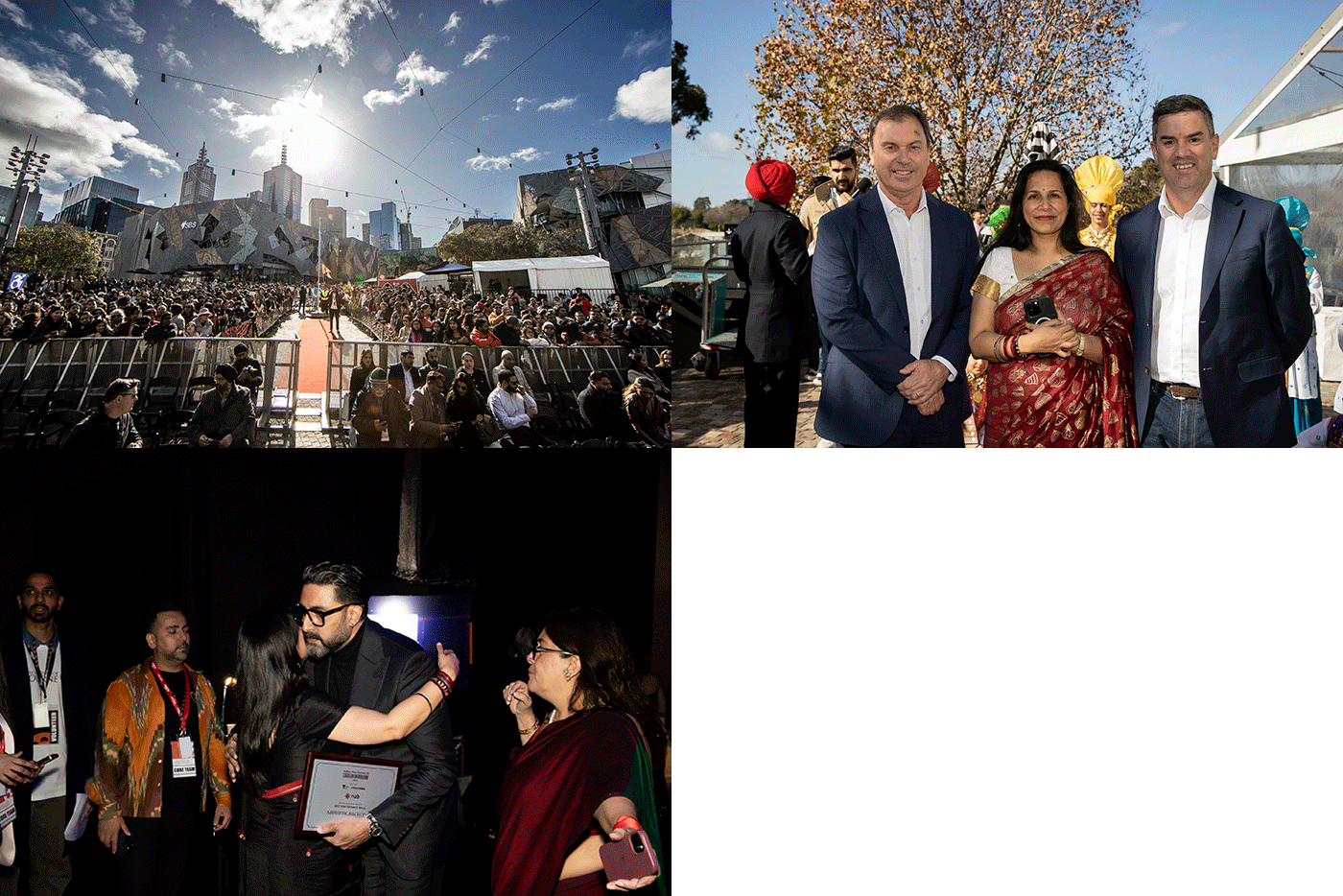
Melbourne has quietly grown into one of the most welcoming global stages for Indian cinema. Over the years, the city has become more than just a destination for screenings. It has evolved into a space where Indian stories are celebrated with care, context, and curiosity. Much of this journey can be traced through the steady growth and vision of the Indian Film Festival of Melbourne, which has played a central role in shaping Melbourne’s relationship with Indian films.
A city built on culture and conversation
Melbourne’s cultural fabric makes it uniquely suited to host cinema from India. Known for its festivals, theatres, galleries, and multicultural communities, the city has long embraced stories from across the world. Indian cinema finds a natural home here because Melbourne audiences are open, engaged, and eager to explore narratives beyond borders and languages.
The city’s strong Indian diaspora adds another layer. For many, watching Indian films in Melbourne is both a personal and collective experience. It is a reminder of home, identity, and shared memory, while also being a way to introduce Australian audiences to the richness of Indian storytelling.
IFFM and the idea of inclusivity
From its early editions, IFFM positioned itself as a festival that reflects the diversity of Indian cinema. The programming has consistently gone beyond mainstream Hindi films to include regional cinema from across India. Languages, cultures, and storytelling traditions from different parts of the country find space here, allowing the festival to present a fuller picture of Indian cinema on a global platform.
This inclusivity extends to themes as well. Films showcased at the festival over the years have explored family, migration, gender, identity, social change, and belonging. These are stories that resonate deeply with multicultural audiences and align naturally with Melbourne’s own values as a global city.
Celebrating filmmakers, actors, and craft
One of the reasons Melbourne feels like a cultural home for Indian cinema is the way filmmakers and artists are welcomed. IFFM has hosted some of the most respected actors, directors, and technicians from India, not just for red carpet moments, but for meaningful conversations. Panel discussions, masterclasses, and audience interactions allow creators to speak about process, intention, and storytelling in a thoughtful setting.
These exchanges turn the festival into a space for learning and dialogue. For young filmmakers, students, and cinephiles in Melbourne, this access helps deepen their understanding of Indian cinema as an art form rather than just entertainment.
Films meeting the city
Over the years, the festival has used Melbourne’s iconic venues and public spaces to create memorable cinematic moments. By placing Indian films and film conversations in recognisable city landmarks, the festival reinforces the idea that these stories belong in Melbourne’s cultural landscape. Cinema does not arrive here as an outsider. It becomes part of the city’s rhythm.
These experiences help local audiences associate Indian cinema with the city itself, strengthening the emotional connection between place and storytelling.
Supporting collaboration and new voices
IFFM has also been a platform for collaboration between Indian and Australian creatives. Initiatives like My Melbourne brought together filmmakers from both countries to create short films rooted in shared social realities. Projects like these highlight how cinema can be a bridge between cultures, encouraging new perspectives and cross-border storytelling.
For emerging voices, especially independent filmmakers, the festival offers visibility and validation. Being screened in Melbourne often becomes a stepping stone to wider international recognition.
A festival that grows with its audience
What makes Melbourne feel like a true home for Indian cinema is continuity. Year after year, audiences return, conversations deepen, and programming evolves. Alongside contemporary films, the festival has increasingly showcased restored classics and tributes to influential filmmakers. This balance between new voices and cinematic heritage helps preserve cultural memory while encouraging innovation.
The festival experience is not limited to watching films. It is about shared discussions, intergenerational audiences, and discovering stories that stay with you long after the screening ends.
Why Melbourne matters to Indian cinema today
Melbourne offers Indian cinema something rare. A city that is culturally curious, structurally supportive, and emotionally receptive. Through IFFM, Indian films are not only screened but contextualised, celebrated, and remembered. The city listens to these stories, engages with them, and makes space for them to grow.
That is why Melbourne continues to feel less like a stop on the festival circuit and more like a second home for Indian cinema.